Month: March 2018

  • Great YA Fiction: The Gentleman’s Guide to Vice and Virtue

    The Gentleman's Guide to Vice and Virtue (Guide, #1)The Gentleman’s Guide to Vice and Virtue by Mackenzi Lee
    My rating: 5 of 5 stars

    I bought this brilliant piece of YA fiction on a whim, and I’m so glad I did. 4.5 stars!!

    Mackenzi Lee might now just be near the top of my favorite writers.  This excellent piece of YA fiction is filled with wonderful characters you can get behind, hauntingly beautiful language, all topped off with social themes that YA readers are hungry to explore.

    Lee told the story in first person present tense, a particularly difficult POV and tense combination to do well. I’ve read many a story written in this POV that felt far too whiny and self-absorbed.  Considering how self-absorbed Lee’s main character-Monty-is, I’m amazed that this book didn’t feel that way. Lee found the perfect balance between interior monologue and external action, and she contextualized Monty’s moments of angst perfectly.

    She did a great job of capturing the diction of the time period in which the story takes place, as well as the language used by highborn families. I can imagine some might fall prey to overwriting or writing that felt like it was trying too hard. Not so here. Lee’s descriptions are lyrical and develop the setting as much as the characters.


    For example:

    “Versailles is a delirious fantasy of a place. We cross through a card room and into the mirrored hall where the king receives his court, every surface not covered with a looking-glass gilded in gold or frescoed in jewel tones. Wax drips in hot, sticky threads from the chandeliers. The light is pyrite, with snowflakes of color refracted through the crystals splattering the walls. The party spills into the gardens, the air hot and hazy with pollen rising from the flowers in golden bursts when they’re brushed. Hedges line the walks, carved into a menagerie of shapes, roses bursting between them. The stars are stifled by the furious light from the palace, and the candelabra lining the stairs are reflected like glittering coins against the bright silk everyone is wearing.”


    Through the misadventures of Monty, Percy, and Felicity, Lee crafted a brilliant piece of YA fiction that explored abuse, sexuality, race, and gender. It could have become didactic, but it didn’t. It was wonderful. The main character was, on the surface, an unlikeable fellow. Narcissistic, emotionally stunted, an alcoholic, whiny, and frankly rather useless. All that said, however, Lee made me like him. She made me root for him.  I’ve encountered so many whiny, self-absorbed protagonists in YA fiction that just made me roll my eyes and move on to reading something else.  Not so with Monty.  Every cringe-worthy moment only made me love him more.

    The world Lee painted and the events of the tale, even the fantastical elements, seemed authentic and real.  No doubt, that’s due to the vast amount of research that Lee did in preparation for writing the book.  There is a delightful bonus at the end of the novel in which she discusses some of that research.

    I have but one minor gripe.  The “I must be misreading the overtly sexual/romantic signals” thing dragged on between two characters to the point of feeling unrealistic. Especially, after said two characters made out at the opera at the beginning of the book. They were all over each other, and then the MC spent most of the rest of the book telling himself that the other person couldn’t possibly have romantic feelings for him. I think Lee was trying to generate teen angst, but it didn’t ring true to me. That was a small issue, however. Not enough to spoil the book.

    I 100% recommend this novel, and I cannot wait to read its sequel: The Lady’s Guide to Petticoats and Piracy, which tracks the continuing adventures of Monty’s headstrong, medicine-minded sister, Felicity.


    Have you read any novels by Mackenzi Lee?  What do you like most about her writing?  Which of hers is your favorite book?


    View all my reviews

  • Book Review: Thunderhead by Neal Schusterman

    Thunderhead (Arc of a Scythe, #2)Thunderhead by Neal Shusterman
    My rating: 5 of 5 stars

    How did I not already write a review for this fantastic sequel to Scythe?! Well, here we go:

    I would argue that Thunderhead was an even better book than the first book in this series, and that’s a rare thing to find in the world of trilogies. Fast paced, high-stakes, multiple plot threads and character arcs, and an ending that left me reeling and wanting more!

    A hard copy of Thunderhead is selling on Amazon for $15.00 right now.  Not bad.  If you’re not into buying from Amazon, it’s available through ten other sellers.  Check out the Goodreads page for a listing.

    I digress.

    Thunderhead picks up several months after the point where Scythe ends. There are many elements of this book that Schusterman did fantastically well. I’ll start with the thing I found most impressive: his handling of a difficult POV. The chapters tend to jump from character to character, so it’s easy to think that the book is written in limited serial third person, but it isn’t. It’s actually written using an omniscient POV, with the POV emphasis placed on a different character in each chapter. He did a brilliant job with this.

    The characters really started to come into their own in this book. That’s something else Schusterman does well. Not that the characterizations were lacking in Scythe. It’s just that in this book, both Citra (now more Scythe Anastasia) and Rowan Damisch are developed in a more multifaceted manner.  Also, the new character, Grayson, was a welcome addition to the cast.  His story exposed readers to a whole other aspect of the world previously unexplored. Speaking of previously unexplored, several supporting characters from Scythe get a lot of time on the page.

    I must admit, I’m struggling to get into the main villain of this series.

    SPOILER TO FOLLOW!! 

    Stop reading here if you don’t want any of the plot elements revealed before you go and read this excellent book.


    Goddard is brought back as the main villain, despite having been decapitated at the end of the last book. This felt like a cheap trick to me. Like something you might expect of a cheesy daytime soap opera. I have to wonder if that was Schusterman’s plan from the outset.  Or, did he think of it later and architect an explanation to let it work.  It feels like the latter, because he failed to drop any hints at the end of Scythe that maybe Goddard and some of his crew weren’t quite as deceased as everyone thought. Had he dropped that hint, I would have willingly gone along with this storyline. As it stands, it felt too forced.

    The Thunderhead becomes an active character in this book (hence the title). All I have to say about this benevolent overseer is this: ripe for a psychotic break. We shall see.

    I can’t remember the last time an ending to a book left me so breathless and excited. I highly recommend Thunderhead, and I can’t wait for the next book in the series. There is a major plot development that has yet to be explored. What shall Rowan and Scythe Faraday find when they visit the Land of Nod?

    View all my reviews over on Goodreads.

  • The Pros and Cons of Grammarly.com

    The Pros and Cons of Grammarly.com

    There are a gazillion writing apps and programs out there in the digital world, some that cost money and some that are free.  Of them all, I’ve tried a handful.  However, after two years in grad school, chasing the dream of getting an MFA in creative writing, I’ve come to rely heavily on one in particular: Grammarly. Just to be clear, I’m not affiliated with Grammarly.  I’m not getting paid to push the app.  It’s definitely not perfect, but I like it enough to write a post about it.


    What is Grammarly?

    Grammarly.com is an online writing program with a free version and a premium version.  The Chrome extension is free, or you can pay a monthly, quarterly, or yearly subscription fee to upgrade.  As you probably guessed, the cheapest per month price comes with the annual subscription and works out to about $12/month.

    I tried the free version when I was putting together my application materials for Lesley University’s Low Residency MFA in Creative Writing program.  Everything I wrote (cover letter, personal essay, and my creative piece) got fed through the program and analyzed.  The day I got the news that I’d been accepted into the program, I bought the yearly subscription because I knew I’d be using it often for the next two years.


    What Does Grammarly Do?

    Grammarly features

    In a nutshell, it makes your writing better.  It is, for all intents and purposes, an editing algorithm.  I’d even go so far as to say that it’s a pretty darned good one, too. 

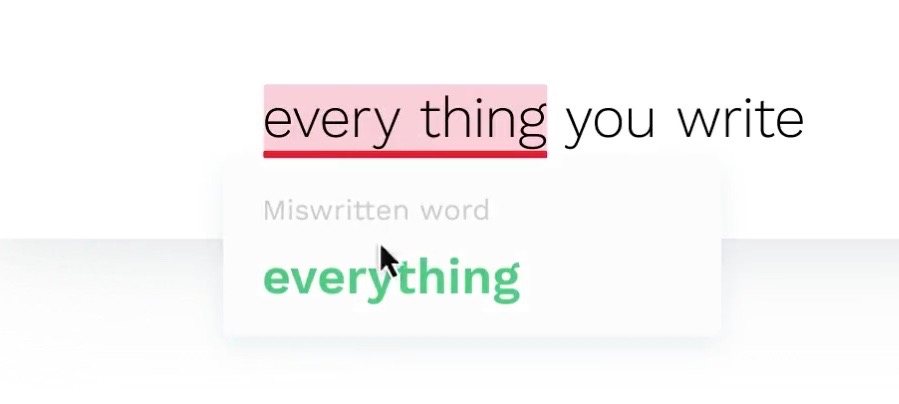
    See that fancy infographic I screenshotted off their homepage up above?  Well, after two years of using the software I can say with confidences that it does all of that.

    You can either type directly in the program, or you can upload a file (google doc, word doc).  I tend to cut and paste in my material.

    Grammarly Improves Your Writing


    The above claim sounds a little hoaky.  I mean, if you write enough stuff, your writing skills are going to improve no matter what.  It’s inevitable.  That said, the detailed explanations that pop up when you hover over a flagged item is a mighty great feature.  I like not having to dive out to dictionaries and thesauruses and my copy of The Everyday Writer to check whether a word is appropriate or a grammatical construct is valid.  In that way, Grammarly will probably improve your skills faster than they otherwise would.


    Free Versus Premium:

    Grammarly free versus premium

    The free version of Grammarly is legitimately decent.  Heck, I used it to clean up my application materials (successfully).  I only upgraded from the free version to catch stuff I’m apparently blind to: spelling mistakes, homophone errors, repetitious used of certain crutch words, etc.  I can read through a written piece ten times, and the thing will still look like it was written at 3AM by a sleep-deprived college kid.

    For me, all the extra bells and whistles were worth the money.  On one of my earliest submissions in my grad school program, I was up against a deadline and in my stressed-out frame of mind, I forgot to run my submission through Grammarly.  I’d read it over multiple times, tweaking, correcting awkward sentence structure, finding typos, and punctuation errors, etc. 

    My professor sent the submission back to me.  She wouldn’t read a piece with more than two mistakes per page.  I was mortified.  Since then, I’ve never forgotten to use Grammarly to check my work before sending it out to anyone.

    Grammarly Pro FeaturesWhen you start a new document in Grammarly, you can select which features are or aren’t active.  You can also help the algorithm edit to your needs by telling it what type of document it’s analyzing.

    I’ve let the program run an analysis of a document in its “General (default)” setting, made note of the number of “critical” and “Advanced” issues, and then selected “Novel” format and let it re-analyze the document.  The number of “critical” issues rarely changes.  The number of “advanced” issues almost always decreases in novel format.  I guess that means the algorithm knows that creative writers play it a little fast and loose with grammar rules.


    Professional Proofreading Services

    Professional Proofreading Services

    Premium memberships give you access to a feature I have never used.  Supposedly, a real person will read your document and give you feedback on it.  I’m skeptical.  I don’t know who’s putting eyes on my stuff on the other end.  It could be someone with legit editing skills, or it could be someone for whom English is not their first language.  For all I know, it could be a well-trained monkey.  Maybe one day, I’ll submit a document for professional proofreading, just to see what happens.  I probably should. I’m paying for the feature, after all.


    Drawbacks and Downsides?

    Of course there are drawbacks and downsides. 

    First, it costs money.  That said, it rubs me the wrong way when folks gripe about having to pay for things they want.  As if they’re entitled to get everything they want in life for free.  Sorry, but someone took the time to write a pretty massive program and debug the thing.  They deserve to get paid for their work.  

    Second, it misses errors.  After two years of using the program, I’d estimate that Grammarly misses between 30% and 50% of all the errors that exist in a piece of writing.  For some folks, that’s a deal breaker.  Not for me.  Why?  Because the program gets me 50% to 70% of the way toward a mistake free document.  That saves me time, and my time is valuable.  Now, maybe utilizing that nifty professional proofreading feature would catch the rest of the errors.  I don’t know.  The point here is, expecting an algorithm to be perfect is dumb.  Especially considering the fact that most of us humans can’t match Grammarly’s imperfect error-catch rate.

    Third (and the biggest downside), Grammarly undoes certain formatting features in uploaded documents.  When you import a piece of writing into the program, all your special fonts, italics, and bold-faced type get converted to plain text.  When you export it back to Google Docs or MS Word or Scrivener or whatever, you’ll have to paw through the piece looking for the lost formatting and fix it. I find that step incredibly irritating.  Invariably, I’ll miss multiple words or sentences that need to be re-italicized.  Grrr.

    So yeah, Grammarly is far from perfect, but it’s still pretty darned great for anyone doing a lot of writing.  

    Do you use Grammarly?  What do you think of the program?
  • Celebrate Your Writing Achievements: An #IWSG Post

    Celebrate Your Writing Achievements: An #IWSG Post

    Another month has come and gone, and it’s time for the March IWSG post. Today, I’ll try to answer the question:

    How do you celebrate when you achieve a writing goal/finish a story?

    I supposed the answer depends in part on how you define writing achievements, or goals for that matter.

    The Insecure Writer's Support GroupBefore we get rolling on that, however, let me take a moment thank this month’s most excellent hosts:  Mary Aalgaard, Bish Denham,Jennifer Hawes, Diane Burton, and Gwen Gardner!  

    Head over to their blogs and check out what they have to say on this topic.  And, if you’re curious about IWSG, click the picture to the left to jump over to their page and see what they’re all about.  You won’t be sorry, I promise.

    Okay, back to the question at hand.

    Writing a Novel is Like Climbing Mount Everest

    Everest Base CampA lot of folks look at Everest and wonder why anyone in their right mind would ever be tempted to try climbing it.  Others can understand the desire but say up front that there’s no way they’re ever going to do it.  Then there are the people ambitious enough to try.  Aspiring novelists are like those people.
    We look at that summit, and we think, “Yeah, I can probably do that.” Then, amazingly, some of us do.  Most of us, however, aren’t ever going to see the vista from the top.

    Jason Reynolds (a professor at Lesley University and my graduating thesis reader), had a very frank conversation with some of us in the Writing for Young People program about the publishing industry and writing “success.”  He didn’t mince words.  According to Jason, the secret to “making it” as a novelist is to just keep writing.  He’d written something like six books before penning one that took off and did well, financially.  Today, he’s a big name in YA, but only partly because he’s a phenomenal writer.  90% of it, according to him, is that he didn’t let the fatigue of the uphill climb beat him. 

    Everest Trek MapHigh altitude climbers trekking up the face of Everest get to the top one step at a time.  Writers get to the end of their novels one word/sentence/paragraph/page at a time.

    We can learn a few lessons from those crazy mountaineers.  Specifically: give ourselves a chance to pause and celebrate mid-trek writing achievements.

    Every novel has milestones that you should celebrate!

    I’m in the middle of my fourth attempt to finish a book.  Behind me lie three partially completed stories.  One was a just-for-fun summer project back in my twenties.  One is interesting but an unfinished structural mess.  The most recent attempt sits waiting for me to come back to it.  I got distracted from it by by my thesis mentor, Chris Lynch.  It’s a long story.  If you want to read about what happened, you can check out my prior post here.  

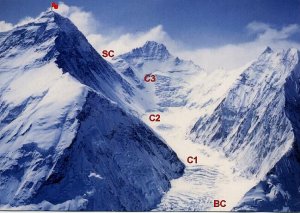
    It has taken me a long time to realize that with each failed attempt, I go into the next project better conditioned and more likely to succeed.  I’m like the optimistic but completely untrained tourist who decides it’d be fun to climb Everest.  First time, I don’t get much past base camp before my body gives out on me.  The second time, I make it to Camp 1 in the Valley of Silence (which should totally be the title for one of my future best-sellers (I did say I was an optimist, remember)), but blisters send me packing.  Third time, I reach Camp 2 at 21,000 feet, hang around for a week to acclimate and then… HAPE sets in and I abandon the climb.

    In this ridiculous analogy, I guess I’m also made of money, because it costs about $35,000 to $45,000 per attempt to scale Everest

    Everest climbers always take a week or so to hang out at the various camps as they push for the summit.  They rest, hydrate, stockpile calories, let their bodies adjust to the thin air, and they enjoy the views. I think writers should do this too.

    Every step is an accomplishment!

    Everest Camp 4Did you write every day for a solid week?  Awesome.  Give yourself a pat on the back, crack open a beer (or a high end ginger ale in my case), take a moment to breathe, then push ahead.

    Did you write all the way up to the end of the first act? That’s base camp 2, as far as I’m concerned.  Take care of yourself in this moment.  Crack another beer (or soda), relax and enjoy where you are in the process. Mull over the best path forward. Do something fun.  You’ve come a long way, but things are about to get very difficult.

    Have you just experienced a brilliant epiphany about your book’s finale, and now the route through the dreaded middle third of your story is clearly visible?  My friend, well done.  You’re sitting at 24,000 feet, the South Col, about to embark upon the big push to the summit.  Take stock of your oxygen reserves.  Hydrate, hydrate, hydrate (maybe not with beer, though), and smile with the knowledge that so many of us shall never get to where you currently are.

    Everest at the SummitIf you do successfully summit that manuscript, be sure to photodocument the moment, because whether or not your story ever lands on an indie bookshelf in hardback, you’ve accomplished something truly spectacular.

    None of these points are actual end points to the novel writing process.  A book isn’t finished until it’s bound and on the shelf, and even then some authors would argue it’s still not done.  However, embedded within a book are countless writing achievements, each of which merits acknowledgement and celebration.

    In my Everest analogy, I’ve just reached the South Col of the Mountain.  For the first time ever, the summit is in sight, the weather looks good, and I think I’m finally conditioned up enough in my skills to get to the top of this thing.


    How do you celebrate your writing achievements?  Do you hold off until you type “The End,” or do you find spots along the way to stop, rest, and reflect on your intermediary successes?